
choose flexible printed circuit manufacturers over rigid ones
When it comes to circuit boards, you can choose between rigid PCBs, flex PCBs, or a combination of both. Rigid PCBs are typically used when a circuit board requires a rigid structure, and they offer superior electrical performance and temperature tolerance. Flex PCBs, on the other hand, have better flexibility, which allows them to withstand bending and twisting, and they also allow for more design variations. However, when deciding between the two options, you must consider your budget and product design, and decide which option best suits your needs.
A flexible printed circuit manufacturers is a pattern of conductors that is printed on a flexible insulating substrate. It is normally etched, and the etch process removes copper from unneeded areas. A wide variety of metal foils can be used for etching, but copper is usually preferred due to its good balance between cost and physical/electrical performance attributes. In addition, etch masks are often used to protect the pads and traces from the chemical process. When the etch masks are removed, the pads become visible and can be soldered to components, which are then inserted into the traces.
To create the desired etching pattern on the insulating layer, the designer uses a computer-aided design (CAD) program. This software is able to create a three-dimensional model of the circuit, including all the copper and insulating layers. In addition, it is possible to test the circuit’s functionality using this software, and any mistakes or inaccuracies can be corrected.
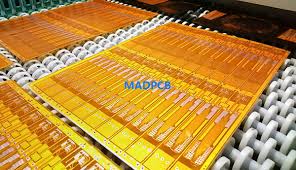
Why choose flexible printed circuit manufacturers over rigid ones?
Another advantage of flex PCBs is their ability to be bent or folded, which can enable them to fit into small spaces that would otherwise be inaccessible. They are also a good choice for high-density applications, where they can provide more space for components than rigid PCBs.
One of the biggest advantages of a rigid-flex PCB is that it eliminates the need for a lot of wire and cables. This reduces the number of potential points where signals can be damaged, as well as the amount of time it takes to assemble and test them. In addition, rigid-flex PCBs can be easily repaired.
When choosing a rigid-flex manufacturer, it is important to choose one that has experience with the latest technologies and equipment. This will ensure that the quality of your flex circuits is consistent and reliable, and it will be easier to keep track of your projects. You should also make sure that the company complies with ISO, UL, and IPC regulations.
Moreover, you should check that the supplier has the capacity to produce the quantity of circuit boards that you need. In addition, it should have a good reputation in the industry. This will help you avoid wasting time and money by hiring the wrong firm. The most reputable manufacturers will have the necessary equipment and machinery to meet your production requirements, such as drillers, surface finishers, imaging tools, and so on. They will also comply with relevant international standards, such as UL 94V-O for fire resistance conformance.