
Adjust Resistance on Pilates Machines
A Pilates reformer is a flat platform that features a sliding carriage, springs and a set of moveable bars. Using these tools, instructors can adjust resistance levels to help all participants get the most out of the workout. The varying amounts of tension in the springs and other props make Pilates more accessible to beginners and seasoned exercisers alike.
The equipment offers a unique strength-building full-body workout that is different from the mat Pilates exercises that rely solely on body weight and the use of additional props such as light dumbbells or a Pilates ring. By combining the movement of the carriage with a dynamic push and pull against resistance created by the springs, the carriage and your own body weight create a challenging, yet fun workout that builds core strength as well as the legs and arms.
Unlike the rapid movement of Tabata-style high intensity training, the movements on pilate machines reformers are slow and controlled. While the slowness of the work can feel counterintuitive for those used to a quick burst of high-intensity training, the slower pace enables you to maintain complete control of the movement of your body, which is critical for ensuring proper form and stability throughout the entire exercise.
As you learn to control the movement of your body on the Pilates reformer, you’ll also develop a deeper connection between mind and body as you become more mindful about the movement and alignment of your own body. This increased awareness helps you become more effective at performing your Pilates work by bringing a greater understanding of how the Pilates equipment’s various tension settings affect the movements and the muscle groups you’re working.
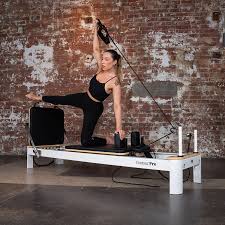
How Do You Adjust Resistance on Pilates Machines?
Many of us have heard instructors offer vague recommendations about how many springs to use during a particular Pilates machine exercise based on the student’s experience level or their proficiency. Adding more springs increases the resistance and subtracting springs decreases the resistance. However, adding more springs doesn’t necessarily equal a harder workout as the different lengths of the springs each provide different opposing forces.
In a class on the Peak Pilates EXO Chair, for example, if an instructor adds two yellow springs (which are approximately 88 lb of resistance) to the footbar during a Long Stretch, that exerciser will be challenged by that opposition as they perform their leg work in the stretch position. She’s committed to recommending only those products that are reliable, comfortable, and genuinely well-reviewed by consumers.
The other pieces of Pilates equipment that often have a fixed number of springs include the Pilates High Chair, which elevates your body up into a range of positions, and the Pilates Ladder Barrel, which allows you to lower yourself over a series of wooden slats held together vertically like a ladder for a challenging workout. There are also many other types of resistance springs that can be added to the Pilates reformer, and you can even use Slastix(r) bands on the Cadillac or Trapeze Table to increase your range of options.