
A vast expanse of wasteland, rugged and hostile, filled with colours of the earth—black, grey, red, brown, with a smattering of green—creates the textural kaleidoscope called Timanfaya National Park.
A protected natural area located on the island of Lanzarote in the Canary Islands, Spain is as unique as they come; the fruit of a series of volcanic eruptions, most notably one that lasted six years (1730-36).
The best view of this gorgeous landscape is from an all-glass restaurant, El Diablo. It overlooks the volcano, the craters, and the unending mountains of lava and ash. That’s not all there is. The ground you walk on, has so much heat trapped inside that you will find employees barbecuing food without using fire. Elsewhere, water is dumped in holes causing fountains of steam to shoot up. As you take in the contrast of cold winds lashing the area while heat rises from below, spare
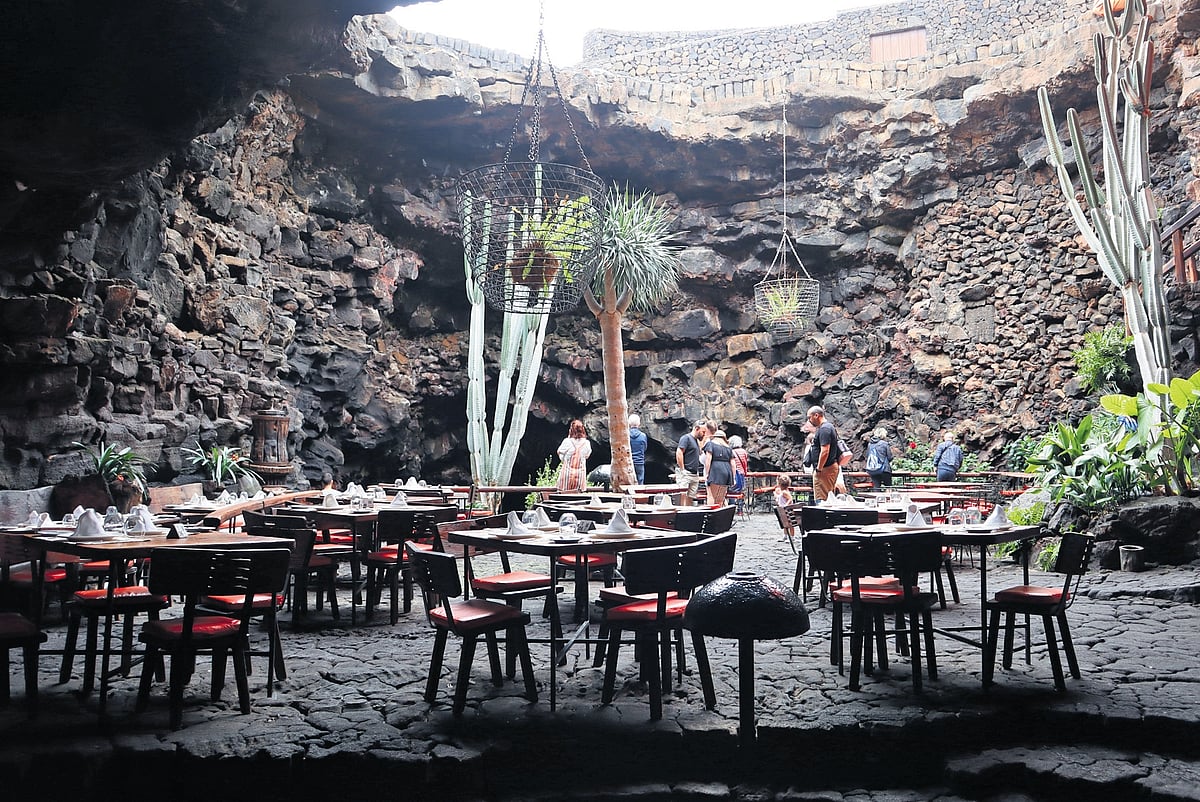
a thought for the artist who is responsible for making your visit. In Lanzarote, nary a day goes by when you don’t hear the name César Manrique. The artist, sculptor, and the island’s favourite son, is responsible for making the island tourist friendly by creating spaces like the restaurant, for visitors to better admire the natural beauty.
It is because of Manrique that the island’s houses are a uniform white, standing out in stunning contrast against the volcanic soil. He didn’t want Lanzarote’s skyline ruined by high-rises and ugly construction; he promoted ecology friendly architecture. No house has more than two storeys, the colours of the doors and windows are that of the island (blue for the sea, green for the interiors).


