
PCB Manufacturer
A pcb manufactures is a specialized company that fabricates printed circuit boards – the backbone of virtually all electronic devices. These complex boards connect and support components and provide rigid support to the device, allowing for efficient data transfer at high-speed. PCB manufacturers use advanced technology and stringent quality control measures to ensure high-quality, reliable results for their clients. This guide explores the role of PCB manufacturers, their manufacturing processes and technologies, and how they contribute to the development of today’s sophisticated electronics.
A pcb manufactures provides a wide range of services, including bare board fabrication, assembly, and design. It is important to look for a manufacturer that offers competitive pricing structures, reasonable lead times, and a high-quality product. You should also consider the manufacturing capabilities, capacity, and flexibility of the manufacturer to ensure they can meet your production requirements. In addition, a good manufacturer should be able to maintain strict inspection procedures and adhere to industry standards.
During the initial stage of PCB fabrication, the design of the circuit board is created using a PCB schematic. The schematic is a blueprint that contains all the vital information required for the fabrication of a circuit board. It consists of a plan that includes all the necessary dimensions, material properties, and electrical connections. It is produced using a computer-based ECAD software, such as OrCAD, Altium Designer, KiCAD, and Eagle, which encodes the data into a file known as a Gerber or extended Gerber. This file contains the graphical representation of the schematic and is used by the PCB fabricator to create the actual printed circuit board.
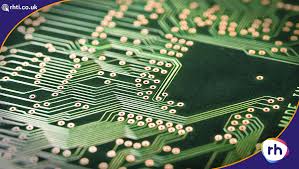
The Role of a PCB Manufacturer
Once the design is finalized, the next step is to prepare it for manufacturing. During this stage, the PCB fabricator takes the Gerber files and converts them into a 3D structure that is ready for fabrication. The bare circuit board is made up of a layer of fiberglass, which is covered with an epoxy resin that is used as an electrical insulator. A copper foil is then bonded to one or both sides of the board.
This layer is then drilled and routed to accommodate the various components and connections of the circuit board. Once the bare circuit board is complete, it undergoes visual and automated optical inspection. This is done to ensure that the bare circuit board meets JEDEC guidelines for component placement and soldering. In addition, it is tested under power off and during functional testing to ensure that the board is functioning properly.
Lastly, the PCB is cut using a routing machine that cuts different boards stacked together into individual boards. The fabricator then covers the bare circuit board with a protective seal to protect it from dust, moisture, and other environmental factors. It is then packed into suitable containers for shipping and delivery. Before shipment, the circuit board is inspected once again for any defects or other issues. If the board is found to be defective, technicians will desolder and replace the failed components.