
What are the key features of a 3S BMS?
A 3S BMS (Battery Management System) is a crucial component for ensuring the safe and efficient operation of lithium-ion battery packs, particularly those with three cells connected in series. It plays a vital role in monitoring, balancing, and protecting the battery pack from potential risks such as overcharging, over-discharging, and thermal issues. Understanding the key features of a 3S BMS is essential for businesses seeking to integrate it into their products or manufacturing processes. Below are the core features that make a 3S BMS an indispensable part of lithium-ion battery systems.
1. Cell Balancing
One of the most important features of a 3s bms is its ability to balance the individual cells within the battery pack. In a series configuration, the cells may charge or discharge at different rates, leading to voltage imbalances. The 3S BMS ensures that each cell maintains an equal voltage level, which is critical for maximizing battery life and performance. Balancing can be either passive or active, with passive balancing dissipating excess energy as heat, while active balancing redistributes energy between cells to optimize overall efficiency.
2. Overcharge and Overdischarge Protection
Overcharging and overdischarging are two major factors that can cause permanent damage to lithium-ion batteries. A 3S BMS is equipped with built-in protection circuits that prevent these conditions by constantly monitoring the voltage of each cell. If the voltage of any cell exceeds or drops below a specified threshold, the BMS will either disconnect the battery from the charging source or cut off the load to prevent further discharge. This protection ensures that the battery operates within a safe voltage range, extending its lifespan and preventing potential safety hazards.
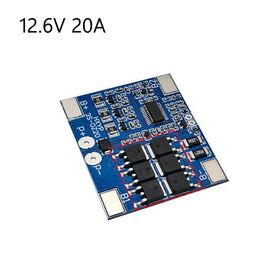
3. Overcurrent and Short-Circuit Protection
The 3S BMS also provides overcurrent and short-circuit protection, which are essential for preventing damage caused by excessive current flow. During charging or discharging, if the current exceeds the safe limit, the BMS will automatically cut off the connection to prevent overheating or potential fire hazards. This is especially important in high-power applications like electric vehicles or energy storage systems, where large currents are involved.
4. Temperature Monitoring
Temperature control is another key feature of a 3S BMS. Lithium-ion batteries can become unstable if they overheat, leading to performance degradation or even thermal runaway. A 3S BMS is equipped with temperature sensors that monitor the battery pack’s temperature during operation. If the temperature rises above a safe level, the BMS will either reduce the charging current or disconnect the battery from the charging source to prevent overheating. This ensures the battery operates within safe thermal limits and helps prevent heat-related failures.
5. State of Charge (SOC) Monitoring
A 3S BMS tracks the state of charge (SOC) of each cell in the battery pack, providing real-time information about the remaining capacity. This feature helps users monitor the battery’s health and ensures that the cells are not overcharged or discharged. By accurately tracking SOC, the BMS optimizes the battery’s performance and provides better predictive data for when the battery will need to be recharged.
6. Communication and Alerts
Most 3S BMS units feature communication capabilities, allowing them to send real-time data to external devices such as a battery management dashboard or a control unit. This communication enables users to monitor the battery’s health, voltage, temperature, and current status remotely. Additionally, the BMS can issue alerts if any issues arise, such as overheating, overvoltage, or undervoltage, allowing for quick intervention to prevent damage.
7. Customizable and Scalable Design
A key benefit of sourcing 3S BMS products is their adaptability to different applications. Businesses can customize and scale their BMS solutions based on specific needs, whether it’s for electric vehicles, consumer electronics, or renewable energy storage systems. With platforms like Global Sources, businesses can shop for wholesale 3S BMS units from verified manufacturers in China, India, Korea, and other countries, ensuring that the BMS system meets the exact specifications required for their product.
8. Reliability and Safety Features
Reliability is paramount in battery management systems, and a 3S BMS is designed with multiple layers of safety features to prevent failure. These features include circuit protection, fault detection, and built-in redundancies that make the system more resilient and trustworthy over time.
In conclusion, the key features of a 3S BMS make it an indispensable tool for managing and protecting lithium-ion battery packs. From cell balancing and overcharge protection to temperature monitoring and communication capabilities, the 3S BMS ensures the safe and efficient operation of battery-powered systems. Businesses looking to procure 3S BMS units in bulk can rely on platforms like Global Sources to find reliable suppliers and streamline their procurement process, ultimately improving product quality and operational efficiency.